Why Are Stones Placed on Jewish Graves?
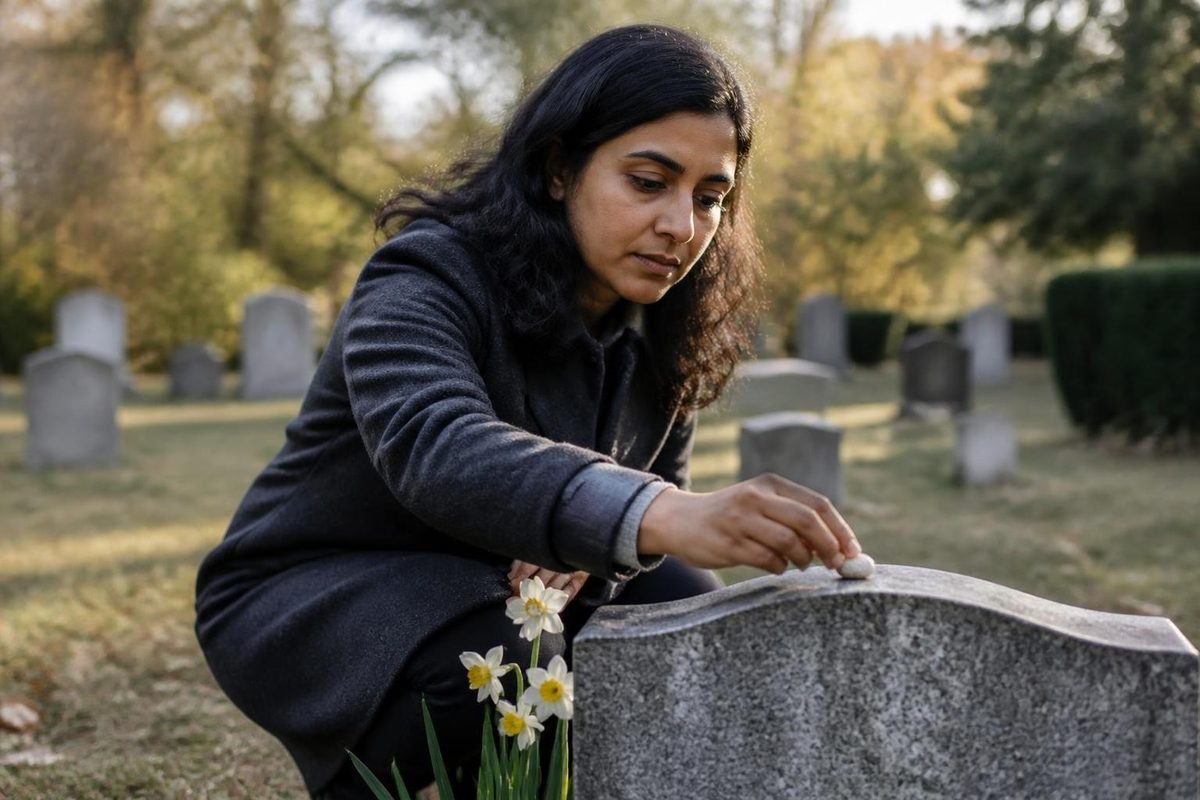
Stones are often placed on Jewish graves as a lasting sign that someone has visited and remembered the person who died. Flowers are not universally forbidden, but stones have become a familiar part of Jewish mourning and remembrance.
What the stones mean
A small stone on a headstone can be a quiet record of a visit. Unlike a cut flower, it does not wilt, so it can remain after the visitor has gone. For some people, that lasting quality reflects the endurance of memory and the continuing bond between the living and the dead.
There is no single explanation accepted by every Jewish community. The practice is old, and its precise origin is uncertain. Some explanations connect it with ancient burial sites marked or covered with stones. Others focus on what the gesture means today, rather than on how it began.
The act is usually simple. A visitor may spend a few moments at the grave, say a prayer, reflect on the person’s life, and leave a small stone on the headstone. The stone need not be special or expensive. Its meaning comes from the visit and the intention behind it.
Why flowers are less common
Customs around flowers vary among Jewish families and communities. In many, flowers are less common at graves and funerals than they are in some other traditions. A family may prefer a simple setting and expressions of remembrance that do not fade quickly.
That does not mean every Jewish person objects to flowers. Some families welcome them, and practices can differ by community, personal preference, and cemetery rules. If you are arranging a funeral or visiting a grave with others, it is sensible to ask the family what they prefer.
A stone is not a replacement for every other act of remembrance. People may also give to charity in memory of the person, offer support to the family, or share a story about the life being remembered. The right gesture depends on your relationship and the family’s wishes.
Common questions
Can anyone leave a stone on a Jewish grave?
Generally, yes. You do not need to be Jewish to leave one as a respectful sign of remembrance. If you are unsure, ask a family member or follow the cemetery’s guidance.
Where should the stone go?
Stones are often placed on top of the headstone or on its base. Choose a small, clean stone and place it gently so it will not damage the marker or fall into a path.
Is it disrespectful to bring flowers?
Not necessarily. Flowers may be welcome in some families and cemeteries, while others prefer stones or another gesture. Check before bringing them if you do not know the family’s wishes.
Do stones have to be left on a particular day?
No. A person can leave a stone during an ordinary visit. People also visit graves at times that are meaningful to them, including around the anniversary of a death.
Related reading: buying seasonal flowers in the city